Breach of Fiduciary Duty: What Every Beneficiary/Trustee Needs to Know

fiduciary duty

Breach of Fiduciary Duty:
What Every Beneficiary/Trustee Needs to Know

As you may or may not know, when a person is charged with making decisions for other people or managing other people’s assets (such as a trustee or agent under a power of attorney) that person owes a “fiduciary” duty to the person or persons on behalf of whom they are acting.

A “fiduciary” means a personal representative, trustee, guardian, conservator, attorney-in-fact under a power of attorney. Generally, a fiduciary has a duty to comply with the terms of the trust, will, powers of attorney, and/or advance health care directives, as well as other duties set forth by California law. However, beyond that, a fiduciary also owes a duty of utmost good faith when dealing with the property of another. In other words, a fiduciary is answerable to those persons of whom they are acting on behalf and may not otherwise make decisions that benefit the fiduciary over the person. A complete discussion on the various duties of a fiduciary and breach of duties would take up volumes, but it is important to know that anyone acting on behalf of another has both duties and limitations in their capacity as a fiduciary.

What is a Violation of Duty?

This article will focus primarily on breaches of duty by a trustee. A trustee is a fiduciary of the highest character whose duty demands the strictest integrity. A trustee “is bound to act in the highest good faith towards his beneficiary and may not obtain any advantage by the slightest misrepresentation. Concealment, threat, or adverse pressure of any kind is unlawful as long as the confidential relation exists,” and any violation of these duties constitutes a fraud against the beneficiaries.

A breach of trust is a violation by the trustee of any duty that the trustee owes a beneficiary. A breach of trust can take place intentionally (in bad faith), knowingly but in good faith, or negligently.

Typical Duties

General duties of a trustee include, but are not limited to:

  • Duty of Loyalty. A trustee has a duty to always consider and act in the best interests of the trust and may not, by the slightest impropriety, seek an advantage from a beneficiary; place his/her own interests above those of the beneficiaries; use the office of trustee to unduly pressure beneficiaries to approve trustee acts; or make secret profits from the trust.
  • No Self-Dealing. A trustee may not deal with themself in any transaction in their individual capacity. The fairness of the transaction and the trustee’s good faith are irrelevant. Self-dealing includes commingling trust assets with the trustee’s own, taking a loan from the trust, and/or personally dealing with unrelated third parties that compete with the trustee’s fiduciary duties to the beneficiary.
  • Conflicting Personal Interests. A trustee must take caution to not put themselves in a position where their personal interest conflicts with the best interests of the trust. A trustee may be removed when there are irreconcilable conflicts between the trustee’s personal interests and those of the trust, or when there are conflicting duties, such as when a trustee is also an officer or director of a company owned by the trust.
  • Duty of Impartiality. A trustee has a duty to deal impartially with all beneficiaries of a trust and must act impartially in investing and managing trust property, while at the same time considering the differing interests of the beneficiaries.
  • Duty of Disclosure. It is a trustee’s duty to provide the beneficiaries with a complete copy of the trust and any amendments to the trust and to otherwise keep the beneficiaries reasonably informed of the trust and its administration. This duty includes a duty to fully disclose all material facts, as well as a full accounting of trustee activities, and to provide all documents in support of the trustee’s activities.
  • Duty to Enforce or Defend Claims. A trustee has a general duty to take reasonable steps to enforce claims of the trust and to defend actions that may result in a loss to the trust, as well as a general duty to enforce claims against a predecessor trustee or a co-trustee.
  • Duty to Complete Administration in a Reasonable Time. While a reasonable amount of time is expected before a trust is in a position to close and the trustee to make distributions to the beneficiaries, a trustee must complete the administration and make the distributions in a reasonable amount of time depending on the particular nature and complexity of the trust.

Remedies for Breach of Duties

If a trustee commits, or threatens to commit, a breach of trust, a beneficiary or co-trustee may commence a proceeding to:

  • Compel or enjoin the trustee from breaching the trust
  • Compel the trustee to compensate for a breach
  • Remove the trustee
  • Reduce or deny compensation to the trustee
  • Disgorge profit of the trustee
  • Surcharge the trustee

Be Informed

If you are a trustee/fiduciary, it may be your obligation to seek professional legal advice on matters related to your duties. If you are a beneficiary who suspects that a trustee/fiduciary is not doing their job, you may want to talk to someone to advise you of your rights. Mortensen & Reinheimer, PC is available to advise you no matter the circumstances.

About the author:
Noah B. Herbold, Attorney, is a Certified Specialist in Estate Planning, Trust & Probate Law (The State Bar of California Board of Legal Specialization). His primary focus is assisting clients with litigated matters such as: Trust Contests, Breach of Trust, Fiduciary Appointment and/or Removal, Asset Ownership, Beneficiary Rights, Determination of Heirship, Elder Financial Abuse, Property Disputes, and Conservatorships. Contact Noah at noah@ocestateplanning.net.

Special Needs Trusts: What Every Parent or Guardian Must Know

online abuse

Special Needs Trusts:
What Every Parent or Guardian Must Know

Parents of special needs children face a wide array of challenges in their day-to-day lives. A key area that must be addressed, in preparing for the many uncertainties of life, is estate planning.  These critical questions cannot be ignored and should be addressed sooner than later:

  • Who will take care of my child if I die tomorrow?
  •  How will my child survive without me?
  •  Will my child be financially stable once I die?
  •  Will my child continue to receive government benefits if he or she inherits funds from a family relative?

Unfortunately, special needs children do face these issues when their parents have not adequately prepared and the results can be tragic.  As such, it is crucial to work with an experienced Special Needs attorney to effectively address these and other issues.

One way to relieve many of these concerns raised in the above questions is to establish a “Special Needs Trust.”  A Special Needs Trust is established to maintain disabled beneficiaries’ specific needs, lifestyles and/or future in the event the parent or guardian passes away.

With this particular Trust in place, parents can appoint an individual(s) as Trustee to manage their child’s finances. This will allow the children to maintain their specific needs and continue with their lifestyle. For that matter, the children’s future will be secured, offering the parents peace of mind, comfort, and hope.

Advantages

  • Preserves the eligibility of the disabled beneficiary for “needs-based” government benefits, while critically simultaneously allowing for the beneficiary to benefit from trust distributions to supplement public benefits and address his or her special needs. Needs-based government benefits include:
    • Social Security Income (“SSI”)
    • Medi-Cal
    • In-Home Supportive Services (“IHSS”)
  • Can be used to receive inheritance funds or proceeds from a settlement on behalf of the disabled person (to avoid disqualifying from government benefits).
  • Assets in a Special Needs Trust cannot be reached by creditors.

Qualifications

  • Person has a developmental disability
  • Person is receiving or is eligible for government benefits (i.e., SSI, Medi-Cal, IHSS).
  • Third party wants a clause added for the disabled person.

Special Needs Trust Funds

The money in a Special Needs Trust is generally used to pay for the person’s personal care, vacation, home furnishings, out-of-pocket medical/dental expenses, education, recreation, vehicle, physical rehabilitation, and other non-disqualifying assets.

Obtain Professional Guidance

This article is meant to provide a general overview of Special Needs Trusts; specific details should be considered, and it is important to discuss applicability to your specific situation.  If you are a parent of a special needs child and believe a Special Needs Trust may be what you need, please contact Mortensen & Reinheimer, PC at (714) 384-6053 or weily@ocestateplanning.net and schedule a consultation with one of our attorneys. We will provide you the proper guidance and advise accordingly throughout the process.


Weily-Yang_150x134About the author:
Weily Yang is an attorney at Mortensen & Reinheimer, PC, an estate planning and probate firm in Irvine. Weily is a zealous advocate for individuals with special needs. His primary focus is special needs trusts and probate conservatorships together with estate planning, trust administration, and probate. He can be reached at weily@ocestateplanning.net.

online abuseWhy Financial Elder Abuse is a Rising Crime – And What You Can Do About It

Financial elder abuse is defined in the Welfare and Institutions Code Section 15610.30 and is incurred when a person takes, secretes, appropriates, obtains, or retains real or personal property of an elder (65 or older) or dependent adult, or assists in doing so, for a wrongful purpose or with the intent to defraud. Such appropriation is found when the person knew or should have known that his/her conduct was likely to be harmful to the victim. This includes undue influence, gifts, and donative transfers such as a change to a will or trust.

Who are the Perpetrators?

Financial elder abuse is fast-becoming one of the biggest crimes against our elderly population. One of the reasons this lesser-known crime occurs so often unseen is because in most cases it is perpetrated by a member of the victim’s own family. Quite often, it is difficult to recognize financial elder abuse because we think of a perpetrator in the form of a contractor charging for unnecessary items, a phone scammer claiming you won the lottery, or a gardener who suddenly ends up the sole heir to your parents’ estate. To the contrary, the fact is that much of the time the perpetrator is a member of the victim’s own family. Often the victim will not report the abuse due to fear or embarrassment, which exacerbates the difficulty of detecting and ending the abuse.

The COVID-19 pandemic presents even more opportunity for perpetrators to take advantage of those vulnerable to abuse, especially if the perpetrator already resides with the victim. The elderly are especially vulnerable to infection from COVID-19 and are encouraged to stay inside and not to socialize in-person with others. This means less contact with friends/family who cannot come to visit in-person any longer, opting instead for phone calls. It is therefore easier for perpetrators to initiate and sustain the financial abuse for an extended period with less fear of apprehension.

Perpetrators often claim to be the “caregiver” while asserting that the victim continues to make all the decisions. However, upon further investigation, it may turn out that the perpetrator has control of the victims’ checkbook and ATM card, credit card, and online access to bank accounts under the guise that they are responsible for paying bills for the victim and running errands. The perpetrator may also have received “gifts” from the victim in the form of cash, vehicles, and sometimes houses and other more expensive items.

Signs of Elder Abuse

  1. The victim no longer manages his or her own finances
  2. Isolation from family/friends, such as monitored phone calls, and required scheduling of visits
  3. Callers/visitors are consistently told that the victim is sleeping and cannot visit or talk
  4. Relationships with the victim become estranged without explanation
  5. Sudden changes to the victim’s estate plan to the exclusion of other close family members
  6. Sudden changes in the appointment of financial decision-maker(s) for the victim
  7. The perpetrator has a new car, takes trips, purchases luxury items, when he/she doesn’t otherwise have other income
  8. The perpetrator receives gifts of money or property, especially when the gifts are not fairly-balanced between the other children or the victim cannot afford to make such gifts
  9. The victim’s mood dramatically changes without explanation, such as depression or fear.

What Can You Do?

  1. Ask questions of the victim and/or the perpetrator. And then ask more questions!
  2. Contact Adult Protective Services to report the suspected abuse
  3. Contact local law enforcement to conduct a welfare check on the victim

Can Anything Be Done After Death?

Yes. Even after the victim has passed away, family members may still pursue a claim of financial elder abuse against the perpetrator.  Contact Mortensen & Reinheimer, PC for a consultation regarding how you can recover the property and punish the perpetrator.

About the author:
Noah B. Herbold, Attorney, is a Certified Specialist in Estate Planning, Trust & Probate Law (The State Bar of California Board of Legal Specialization). His primary focus is assisting clients with litigated matters such as: Trust Contests, Breach of Trust, Fiduciary Appointment and/or Removal, Asset Ownership, Beneficiary Rights, Determination of Heirship, Elder Financial Abuse, Property Disputes, and Conservatorships. Contact Noah at noah@ocestateplanning.net.

Taxation Aspects of Stimulus Programs

3 partners - web{Editor’s note: Debbie Dickson was featured in the recent Orange County Business Journal “Accounting Firms Special Report,” excerpted from the article below.}

Three months ago, at the inception of the stay-at-home orders, we heard from clients who ceased operations overnight:  international rock concert/sporting events producers; owners of a downtown Los Angeles parking tower management company; many lawyers due to court closures; and well-known touring rock bands.  To help each of these businesses and many others to survive, we worked with them to secure PPP loans.  The allure at the inception of these loans was eligibility for loan forgiveness if the proceeds were used on qualified business expenses, and the loan forgiveness amount was marketed as non-taxable.

A month after the PPP program was implemented, the IRS issued Notice 2020-32 which prohibited a tax deduction for expenses incurred and ultimately forgiven.  The IRS ruling effectively made the forgivable part of the loan taxable which did not appear to be Congressional intent in the CARES Act.  The American Institute of Certified Public Accountants immediately challenged the surprise ruling.  Congress has not yet passed legislation to override this decision.

Subsequent to this IRS news, some positive changes were legislated.  As of this date, to apply for loan forgiveness, 60 percent (down from 75 percent) of PPP proceeds must be used to cover payroll or specific benefits, including 401-K employer contributions and health insurance.  The remainder of the business costs must include rent, mortgage interest, or utilities.  These costs may be incurred any time within 24 weeks of the loan origination date.  This is exciting news for many clients who are hoping to bring back their employees and jumpstart operations when the economy stabilizes.

In addition to PPP loans, there are many other ways to qualify for government funds or loans.  These include the employee retention credit up to $5,000 per employee for companies that did not receive PPP funds.  These are for wages paid between March 27 and December 31, 2020 if there is a significant decline of gross receipts of 50 percent or more due to adherence to government orders.  Another example is the deferral of the employer portion of Social Security taxes at 50 percent to December 31, 2021 and 50 percent to December 31, 2022.  Net operating loss carrybacks are now available for losses earned in tax years ending 2018, 2019, and 2020.

Regardless of the taxation aspects of these programs, many companies are grateful for government assistance received to carry them through these unprecedented times.

CLICK HERE FOR PDF OF OCBJ ARTICLE

CONGRATULATIONS TO OUR NEW PARTNERS!

3 partners - webDeborah Dickson, Managing Partner of Smith Dickson, is pleased to welcome Richard Warner, CPA and Ryan Nguyen, CPA to our partnership!
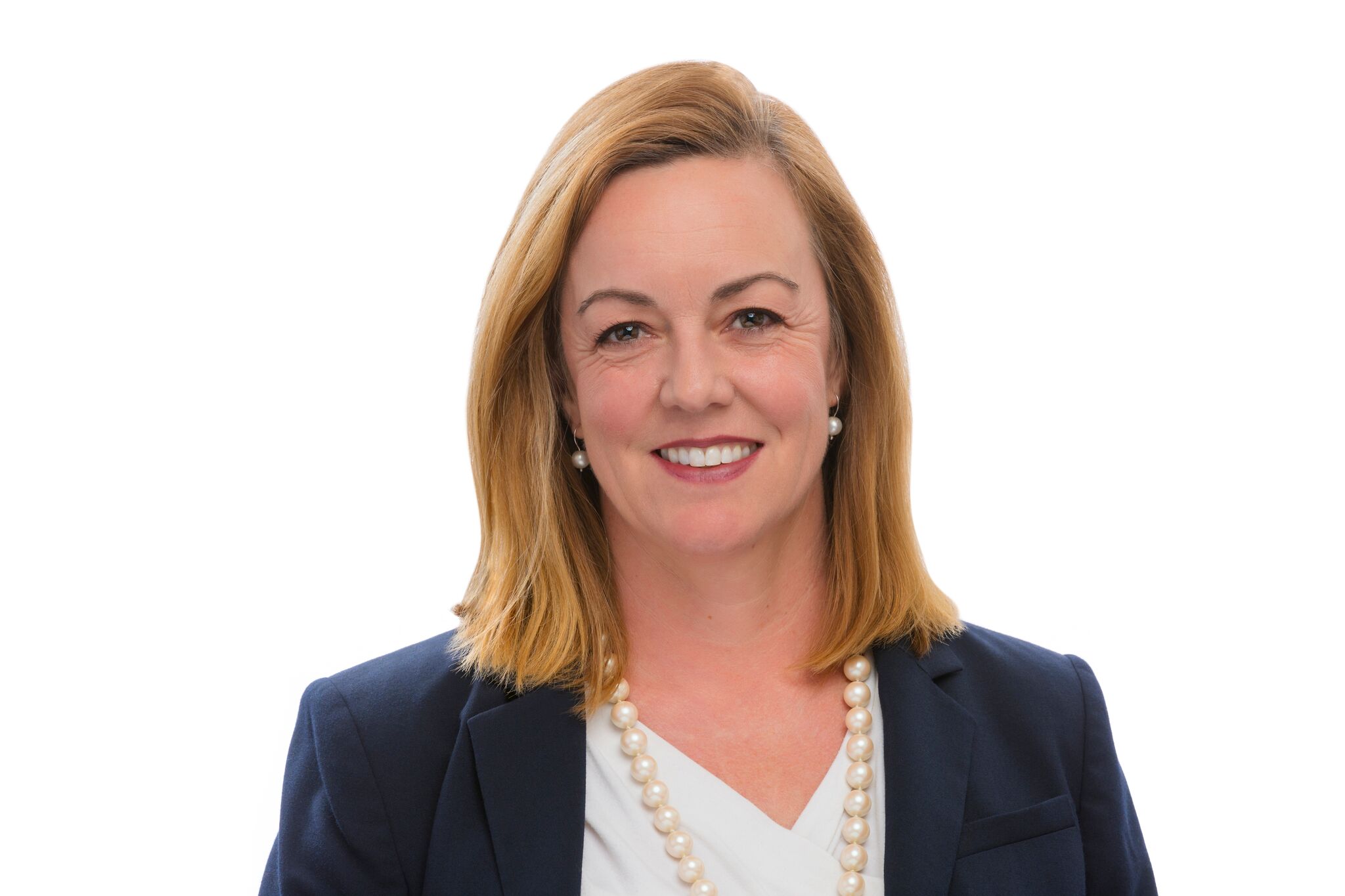
Richard Warner provides innovative tax planning strategies, specialized advisory services, bank negotiations, and merger and acquisition structuring. He oversees tax strategy and compliance work for individuals, partnerships, and corporations.

Ryan Nguyen is a leader in the forensic CPA arena with extensive experience in financial analysis, fraud investigations, Rule 26 and other report preparation, litigation consulting, and expert witness testifying. He also leads his team in performing assurance services.

Richard and Ryan have each been with Smith Dickson for over 10 years. Congratulations from all of your colleagues!

grandfather and grandaughterThe SECURE Act: Estate Planning for Inherited IRAs

Have you heard of the Setting Every Community Up for Retirement Enhancement Act of 2019 (“SECURE Act”), passed by Congress in January of this year?  You may not know that the SECURE Act could impact your existing estate plan.  Here’s how:

If you have previously named a trust as the beneficiary of a retirement account (such as an IRA) because you wanted to control the distribution to your beneficiary, the SECURE Act may affect your planning.

Old Law vs. New Law

Under previous law, a non-spouse beneficiary (such as a child) could take distributions from an inherited individual retirement account (IRA) over his/her life expectancy, thereby minimizing the income tax payments over his/her lifetime (called the “stretch” IRA).  Historically, trusts holding an inherited IRA can provide desirable controls and protections for your chosen beneficiaries : (1) asset protection from creditors and divorce, (2) reduction of a substantial, lump-sum gift that the beneficiary could squander in a short time, and (3) income tax deferral on distributions from the IRA.  If the beneficiary was much younger than the IRA owner, the Required Minimum Distributions (“RMDs”) were calculated based on the child or other young person’s lifetime so the proceeds would be paid out over their life expectancy and only the minimum distributions would be income-taxable to the beneficiary.

Under the SECURE Act, payments to most beneficiaries have been reduced to a 10-year term. No withdrawals have to be made during the 10-year period, but at the end of 10-years from the date of the plan holder’s death, the entire balance in the plan must be withdrawn and all of the income tax paid by the beneficiary.

Exceptions to the Payout Rule

There are some exceptions to the new 10-year SECURE Act payout rule for persons who may still withdrawal the IRA proceeds over their life expectancy:

  • Surviving spouses
  • Chronically ill and Disabled persons
  • Persons within 10 years of age of decedent

Minor children are also exempted so that the 10-year payout will not begin until they reach adulthood (age 18 in California) and be paid out by year 10 (age 28).  There is one exception to this timeline: a child may be treated as having not reached the age of majority if the child has not completed a specified course of education and is under the age of 26. This delay will help parents better plan for their minor children who intend to pursue college or university without worrying about a lump sum payment at age 28; however, more guidance from the IRS is needed to clarify how this exception will work in actual application.

What Should You Do?

If you have designated a trust as the beneficiary of your retirement accounts, you should review the drafting of that trust with your estate planning attorney to understand the implications of the SECURE Act. Some key issues to address include:

  1. If you have named a trust as beneficiary and might wish to revise that trust to avoid the beneficiary receiving a large lump sum distribution after 10 years.
  1. If you would prefer to gift some or all of your IRA outright to the beneficiary and abandon the shelter of the trust.
  1. If you wish to keep a trust in place despite the poor income tax treatment because your beneficiary cannot manage money on his/her own or suffer from significant substance abuse problems that is not considered a “chronic illness” or “disability.”

Note that the SECURE Act only applies to retirement plans that are inherited after January 1, 2020, not to those already in place from a prior inheritance.

If you wish to review your estate plan and designated beneficiaries on your retirement accounts, please call or email to set up a free twenty (20) minute consultation with a Mortensen & Reinheimer attorney to determine how the SECURE Act potentially affects your estate planning.  You may not need to change your plan due to the new law, or you may simply need to change the beneficiary designation of your IRA and not your estate plan.

Tamsen-Reinheimer_150x100

About the author:
Tamsen R. Reinheimer, Attorney, is a Certified Specialist in Estate Planning, Trust & Probate Law (The State Bar of California Board of Legal Specialization). She has significant experience in all aspects of estate planning, trust administration, and probate. Contact Tamsen at tamsen@ocestateplanning.net.

Watch Out for Wildfires and Unneighborly Neighbors:

house fireLiability & Title Insurance and Your Living Trust

We Californians have become more nervous about wildfires over the past few years, not to mention the typical earthquake. If you transfer your home into your living trust (as you should!), be sure to call your homeowner’s insurance company and add the trust as an “additional insured” on your policy.  With most insurance companies, this will not increase your premium, and will keep your home insured inside your living trust in the event of a natural disaster.

Likewise, review your title insurance policy to make sure it defines “insured” to include your living trust. This will protect you in the event of a boundary dispute with a neighbor. You can find your title policy with the original escrow paperwork when you purchased your home. The Homeowner’s Policy of Title Insurance (after 1998) is the default policy in California and includes transfers to living trusts and will not terminate title insurance. By contrast, the CLTA Standard Coverage Policy (before 1998) does not include living trusts as an insured and will cancel your title insurance policy.  Either way, you can contact the title insurance company and obtain an “Additional Insured” endorsement to add your living trust to the policy so your home will stay covered in the event of a dispute with your neighbor.

Tamsen-Reinheimer_150x100

About the author:
Tamsen R. Reinheimer, Attorney, is a Certified Specialist in Estate Planning, Trust & Probate Law (The State Bar of California Board of Legal Specialization). She has significant experience in all aspects of estate planning, trust administration, and probate. Contact Tamsen at tamsen@ocestateplanning.net.

elderly coupleEstate Planning:
Recent Engagements During COVID-19

Is This Your Situation?

Since the COVID-19 pandemic hit Orange County, Mortensen & Reinheimer, PC has received numerous requests for assistance. A typical inquiry … “We communicated about a year ago and I failed to follow up, as I got distracted and made planning a low priority.  COVID-19 serves as a good reason for me to get my act together regarding wills and trusts. I would like to get this process moving and want to know how to best proceed. Are there updated documents you need? Can we do the entire process virtually?”

These inquiries point out the need to do comprehensive estate planning — and to avoid being unprepared to deal with the impact of any lengthy illness or death.  Our attorneys help clients prepare for these difficult decisions, providing expert guidance throughout each step of the process.

It might be helpful to demonstrate how we can help through a couple of our recent engagements during the pandemic:

Case #1 – Family business and simplified marital estate planning: Many of our clients have small family-owned businesses and desire succession planning as a key aspect of their estate plan.  In this case, our clients were a couple looking ahead toward retirement in a few years, expecting their adult child to move up in the family business and assume full control and ownership.

The couple had an existing estate plan but it was nearly 100 pages long and overly complicated.  The former attorney provided too many options, making it difficult to understand and even harder to implement.  Since the couple had never been remarried and other complications did not exist, it was unnecessary to make the estate plan complex.

Mortensen & Reinheimer, PC crafted a plan that met this couple’s specific needs, including a straightforward living trust (and will), durable power of attorney, beneficiary designations, letter of intent, healthcare power of attorney, and guardianship designations.  The plan was simple to implement and steps are currently underway to file deeds of trust and other related documents. The clients were very content in knowing that their business will be passed along as planned and all other estate details are in order.

Case #2 – Conservatorship turned to Inheritance and Business Succession Planning: In this recent matter, a client had previously asked Mortensen & Reinheimer, PC to prepare a conservatorship for the elderly father and his son as conservator.  When the father recently passed, the son inherited the business and needed to update his own estate plan.  A few complications existed due to family structure and specific desires for asset disposition.

Key goals of the plan included: establishing community property rights for the spouse, including substantial real estate wealth; planning for one of the children to eventually take over the business; and working with the family’s business transactions attorney to structure buyout options for other children not involved in the business.  This estate plan is currently underway and we are communicating regularly with the client as each step is completed.

Video of the Month: Conservatorships

A conservatorship is established for an adult person who is unable to handle his or her own financial or personal affairs. The conservator (person who is authorized to make decisions on behalf of the incapacitated person) can be a parent, spouse, child, other relative, friend, or professional conservator. We want our clients to be as informed as possible about the important decisions they’re making, so learn more about conservatorships in our video.

Ready to Assist You

The attorneys at Mortensen & Reinheimer, PC are available to help you.  All of our staff are working remotely, keeping our law corporation operational.  Since in-person meetings are not an option for most at this time, we can assist clients through “virtual” telephone or video conferences.  In addition, most of the follow-up legal and administrative work can be done remotely and by email/mail.  Our goal is to help you move forward with your estate planning issues, even in the midst of these very trying times that we are all facing.

Tamsen-Reinheimer_150x100

About the author:
Tamsen R. Reinheimer, Attorney, is a Certified Specialist in Estate Planning, Trust & Probate Law (The State Bar of California Board of Legal Specialization). She has significant experience in all aspects of estate planning, trust administration, and probate. Contact Tamsen at tamsen@ocestateplanning.net.

elderly coupleEstate Planning:
Key Client Concerns During COVID-19

Helping Clients at this Crucial Time

Our role as estate planning attorneys is to help clients prepare for some of the most difficult decisions in their lives, then to guide them through it each step of the way with thoughtful and expert guidance.  We care about the welfare of each of our clients and desire to help them as much as possible.

The coronavirus COVID-19 pandemic has caused many to worry about estate planning, such as concerns about their will, trust and related issues.  The reality of mortality is very concerning when the Center for Disease Control is warning that older adults, and people of any age who have serious underlying medical conditions, may be at higher risk for more serious complications from COVID-19.  Mortensen & Reinheimer, PC is here for you if you are struggling with these issues.

If the current circumstances have caused you to be concerned about your estate plan, you’re not alone.  Mortensen & Reinheimer, PC has received many inquiries from clients who are addressing questions, including the following:

  • I’ve been avoiding making decisions on my estate.  Can I get an estate plan done now?
  • Do I need a power of attorney for medical decisions?
  • I need help settling a trust now.  What can be done?
  • Who will be in charge of settling my estate?
  • What are some options for bequeathing my assets?
  • Who will take care of my minor children?
  • Are there specific trust options that are best for my estate?
  • What can I do now?  Are your attorneys working and available?

A Great Time to Access Our Video Library!

As you contemplate your needs (and while you are at home maintaining “social distancing”), you may want to look at our online “video library” to learn from our experienced attorneys about estate planning, wills and trusts, the probate process, and more.  We want our clients to be as informed as possible about the important decisions they’re making.  Check them out to learn more about these important – and often complex – legal processes. For example, see our Wills video to learn more about preparing an individualized and tailored will for you.

Ready to Assist You

Please rest assured that the attorneys at Mortensen & Reinheimer, PC are available to help you.  All of our staff are working remotely, keeping our law corporation operational.  Since in-person meetings are not an option for most at this time, we can assist clients through “virtual meetings” on Zoom, Skype or teleconferences.  In addition, most of the follow-up legal and administrative work can be done remotely and by email/mail.  Our goal is to help you move forward with your estate planning issues, even in the midst of these very trying times that we are all facing.


Please let us know of any questions or concerns that you have.  We want to be there to help you.

Tamsen-Reinheimer_150x100

About the author:
Tamsen R. Reinheimer, Attorney, is a Certified Specialist in Estate Planning, Trust & Probate Law (The State Bar of California Board of Legal Specialization). She has significant experience in all aspects of estate planning, trust administration, and probate. Contact Tamsen at tamsen@ocestateplanning.net.

Response to COVID-19 Outbreak

Hello Clients:

As businesses around Southern California close down in response to the COVID-19 virus outbreak, please know that we are and will continue to work on client matters remotely via email and phone. We also can meet with clients in our large conference room by appointment only for signing and notary services, which allows us to be 4-6 feet apart. We have always taken measures to clean “high-touch” areas like waiting areas and desks, and are now more diligently disinfecting such surfaces before and after all in-person meetings and throughout the day.  We will make all necessary accommodations for you if there is anything urgent to address.

Importantly, please note that most California courts are closing for the next several days and will not be having hearings or processing legal filings. Orange County Superior Court is closed until March 27th; Los Angeles Superior Court is closed until March 20th; San Bernardino Court is closed until April 2nd. That means if you are awaiting the return of important Orders or Letters, you will experience additional delay in attending to your trust or estate matter. We will continue to closely monitor these closures and advise you of any updates as we receive notice from the courts.

Robert_Price_150x138

W. Robert Price, Esq., President, Mortensen & Reinheimer, PC.  Contact Robert at wrobertpriceesq@yahoo.com.